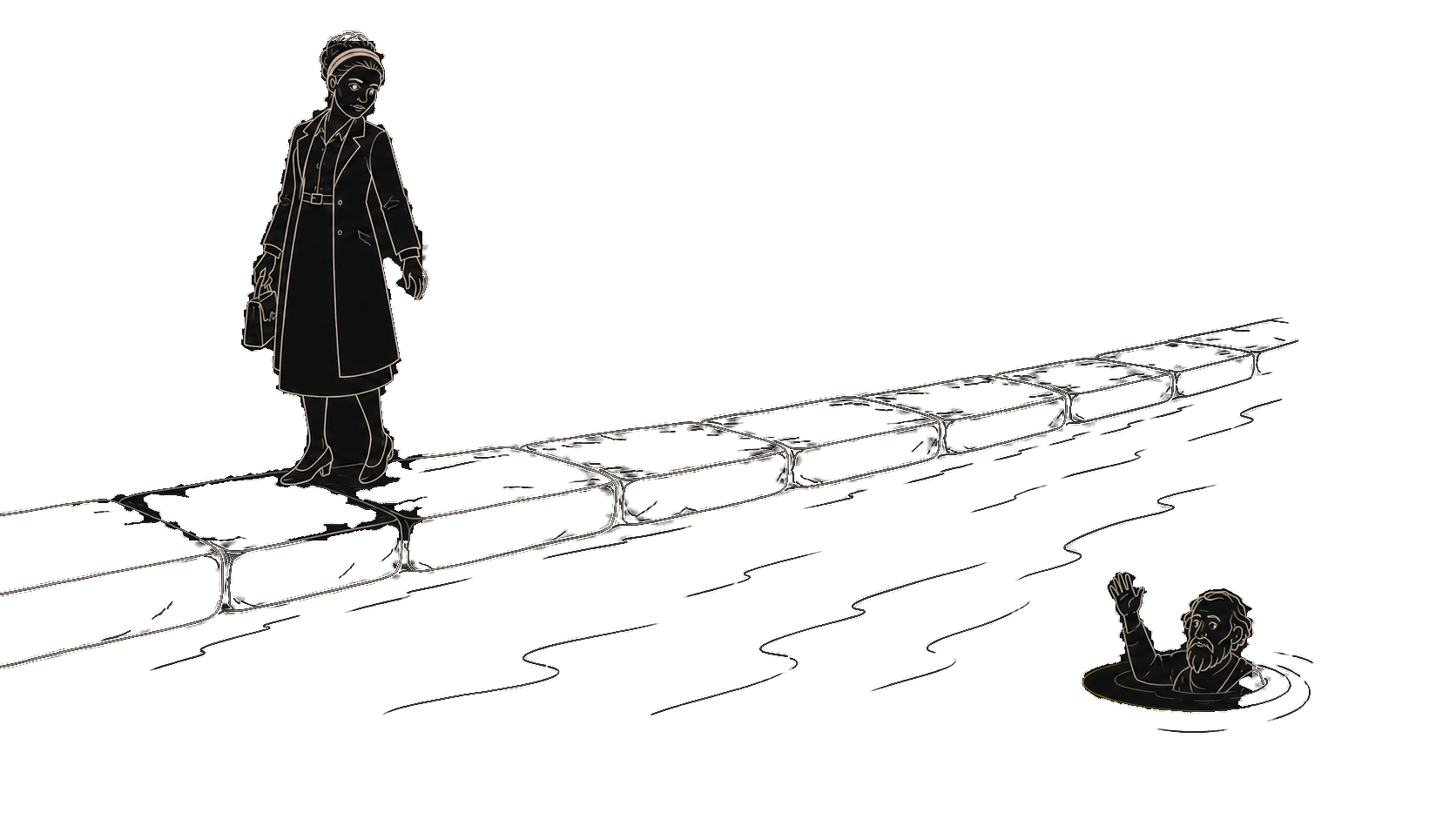
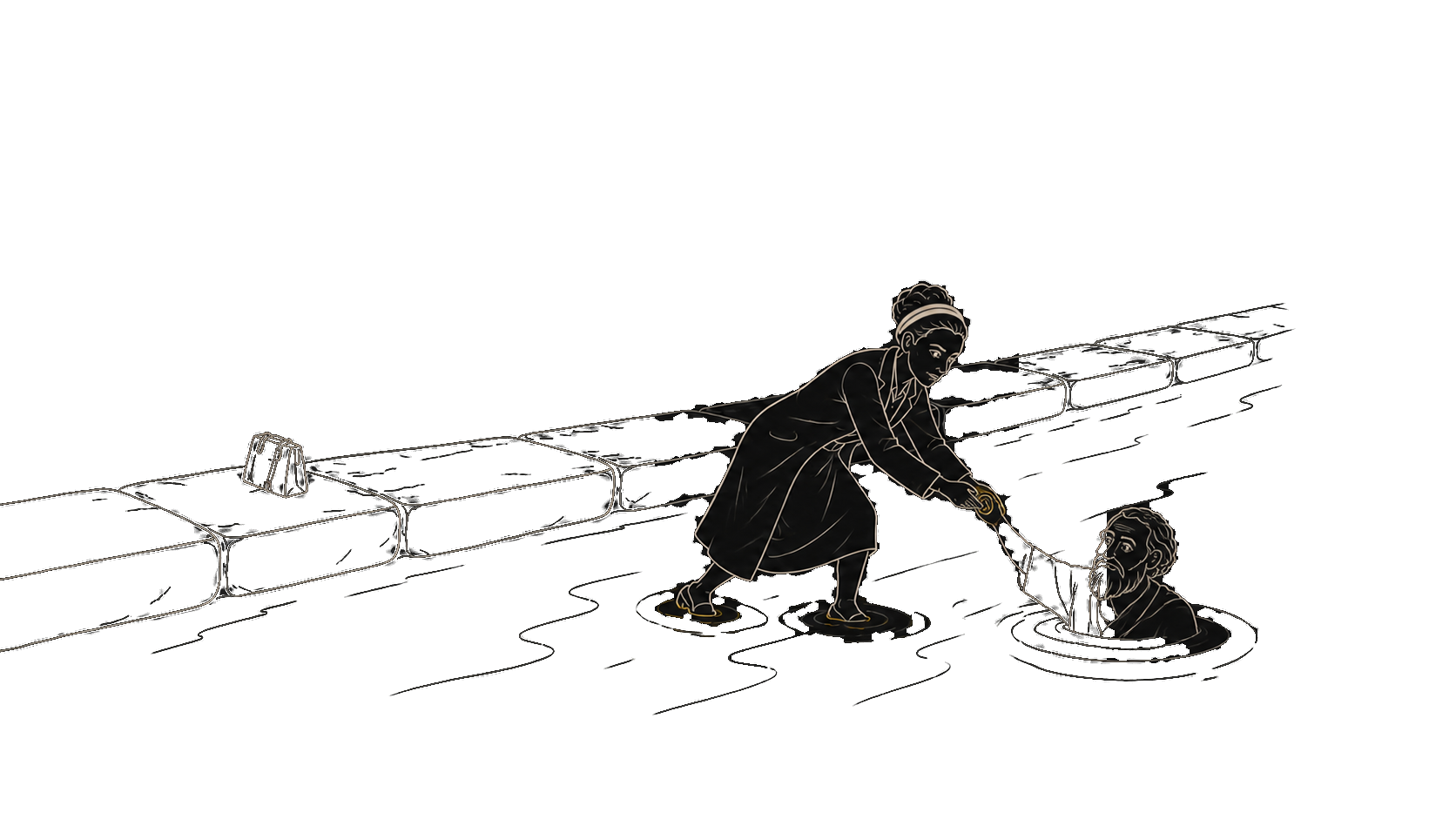
The nearby rescue
You pass a shallow pond and see a child drowning. They will die unless you pull them out. The rescue carries very little risk, though your clothes and plans for the morning will be spoiled.
Changed variable: Baseline: a preventable death is nearby, visible and cheap to stop.
This is the intuitive starting point: a child's preventable death set against a modest cost.
The rescue is far away
The child facing death is now far from you, but a verified rescue network can save them if you give up an equally modest personal benefit. The danger and expected effectiveness are otherwise the same.
Changed variable: Distance changes; need, cost and expected effectiveness stay fixed.
Impartiality challenges the idea that mere distance erases a duty; critics ask whether social relationship and direct agency still matter.
More people can be helped
The same reliable intervention would now save five people from death rather than one, at the same modest cost to you.
Changed variable: The number helped increases; cost and reliability stay fixed.
Impartial aggregation treats each additional person as another strong reason; non-consequentialist views may resist reducing the case to a total alone.
The cost becomes serious
Helping would now expose you to a substantial risk and a lasting loss, not merely inconvenience. The rescue remains likely to succeed.
Changed variable: Personal cost and risk rise sharply.
The demandingness objection asks how far morality may require a person to sacrifice their own security, projects and responsibilities.
The evidence is uncertain
The warning that someone may die is credible, but the facts are incomplete and the intervention may arrive too late. Acting still carries a modest cost.
Changed variable: Need and effectiveness are now materially uncertain.
Expected benefit can still supply a reason, but evidence quality matters when resources and attention could be directed elsewhere.
The demand repeats
Another verified and preventable death appears, then another. Each life can be saved at a modest cost, but meeting every demand would reshape your life.
Changed variable: A modest one-off cost becomes a repeated, continuing pattern.
A principle that seems obvious once may become highly demanding when applied consistently across every comparable need.
Other helpers are present
Several other people are equally able to save the child at the same modest cost. Everyone can see the child drowning, but nobody has moved.
Changed variable: The number of equally capable potential helpers increases.
Fair shares matter, but waiting for others can leave the child to die. Institutional responsibility may be the better long-term answer without cancelling the immediate duty.