First-person experience cannot be captured by a physical description.
Mind may involve properties or a substance not reducible to matter.
Philosophy of mind
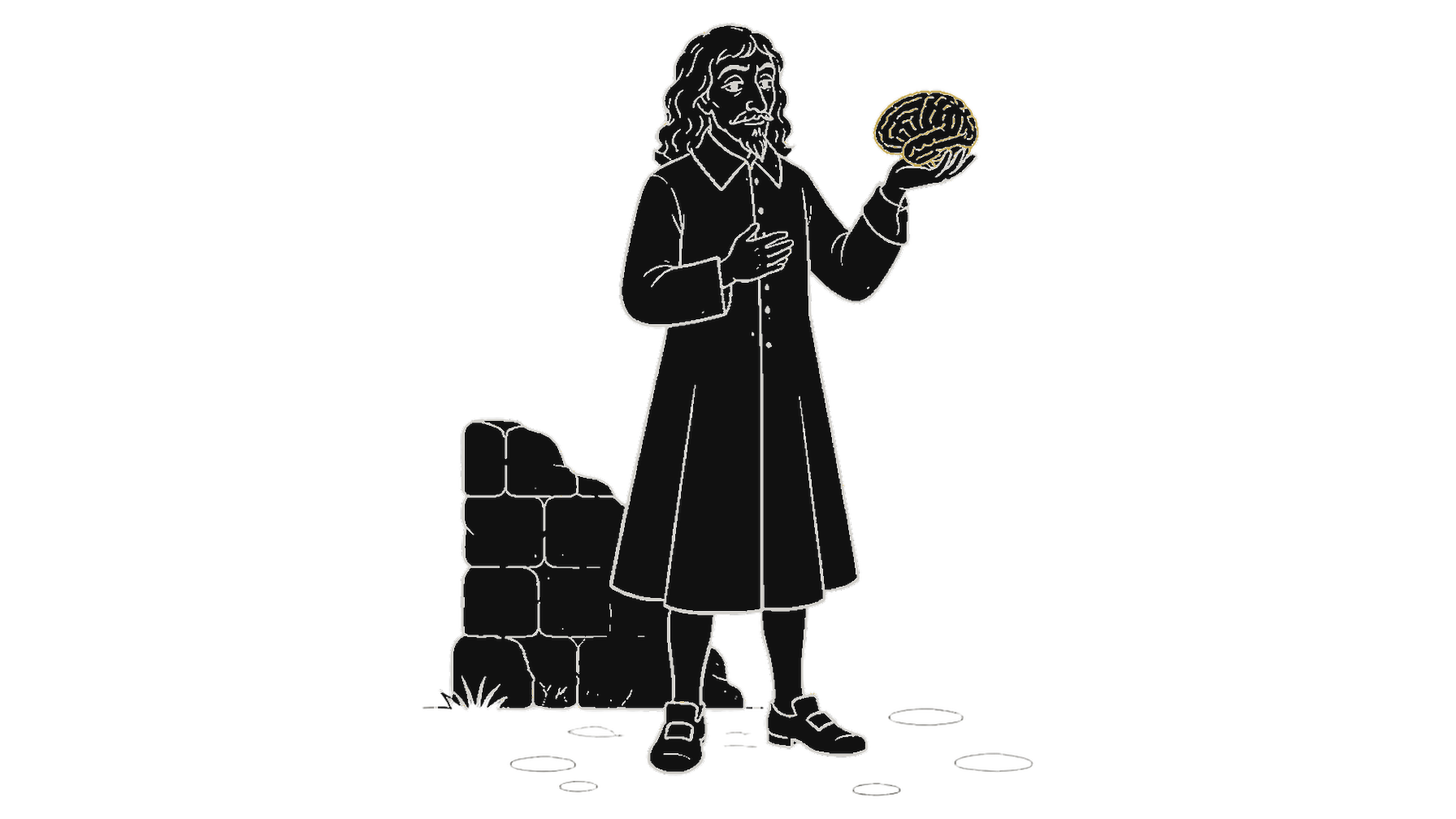
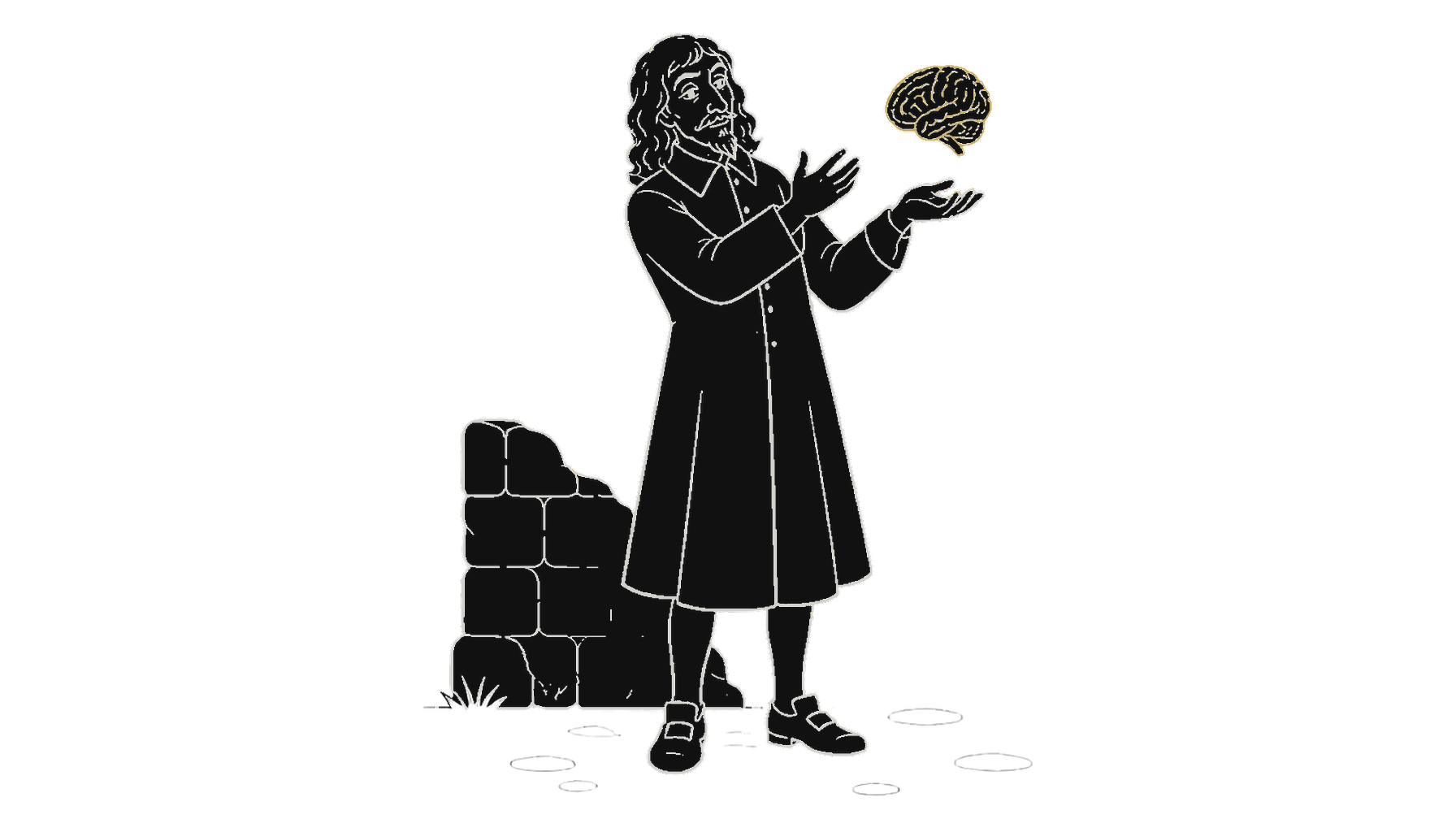
The problem in miniature
Researchers can predictably alter a person's memory, mood and visual experience by changing activity in particular parts of the brain. As the physical intervention changes, the experience changes. This evidence suggests a deep dependence of mind on body. Yet the scan shows electrical and chemical activity, not the redness of red or the feeling of anxiety as the person experiences it. A dualist may say correlation is not identity; a physicalist may reply that no separate substance is needed when mental life changes systematically with the brain. Both must explain what their view adds.
Why this is difficult
Mind may involve properties or a substance not reducible to matter.
The brain appears sufficient to explain mental causation without a separate substance.
Dualism gains support only if conceivability is a reliable guide to real possibility.
Philosophers in the conversation
Descartes argues that he can clearly conceive himself as a thinking, non-extended thing distinct from an extended body. Mind and body nevertheless interact in human life. The view preserves the apparent distinctness of thought but must explain how fundamentally different substances causally affect one another.
Elisabeth presses Descartes on interaction: physical motion seems to require contact, shape or some other physical relation, none of which belongs to an unextended mind. Her challenge asks dualism to explain causal connection rather than merely affirm that thought and matter are distinct.
Ryle attacks the picture of a private mental object operating a bodily machine. He argues that it misclassifies mental concepts, which are expressed through abilities, dispositions and intelligent conduct. Rejecting the ghost does not by itself settle how conscious experience relates to the physical world.
Identity theorists such as Smart propose that sensations are brain processes, not effects produced in a second mental substance. Different descriptions can refer to one event, as lightning and an electrical discharge do. The challenge is explaining why subjective experience appears resistant to an objective physical account.
Key ideas
Follow the question through the curriculum
Develops arguments that mind is fundamentally non-physical and tests their costs.
Continue into the curriculumChallenges · unitCompares behaviourist, identity and eliminative accounts of mind.
Continue into the curriculumTests · lessonAsks whether a physical duplicate without consciousness is genuinely conceivable.
Continue into the curriculumReconsider your answer
A being physically and behaviourally identical to you would insist that it was conscious. If it nevertheless lacked experience, no ordinary observer — including the being itself — could reveal the difference.