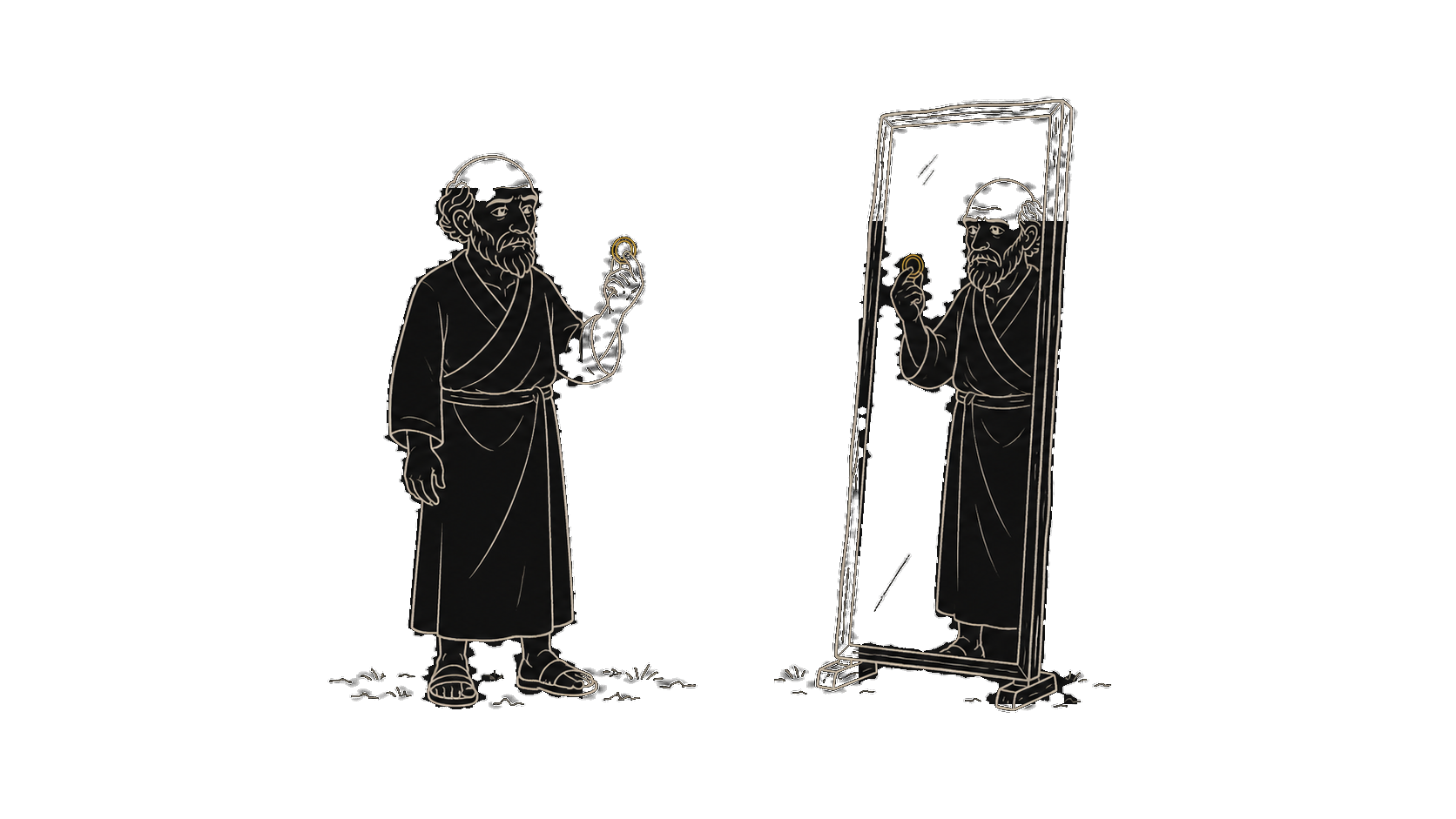
Observed
The found pass
You find a rechargeable travel pass with unused credit. A staffed desk can return it to its registered holder.
Condition: The desk records who found the pass and what they did with it.
- Return the pass untouched: The original holder can recover it through the ordinary process.
- Use its remaining credit: You receive a benefit that was assigned to somebody else.
- Give the credit to someone in need: Another person benefits, but you still redirect something that was not yours to allocate.
- Leave without deciding: You neither use nor return the pass.
Accountability may support justice, but it can also hide whether the rule has any hold apart from enforcement.
Invisible and untraceable
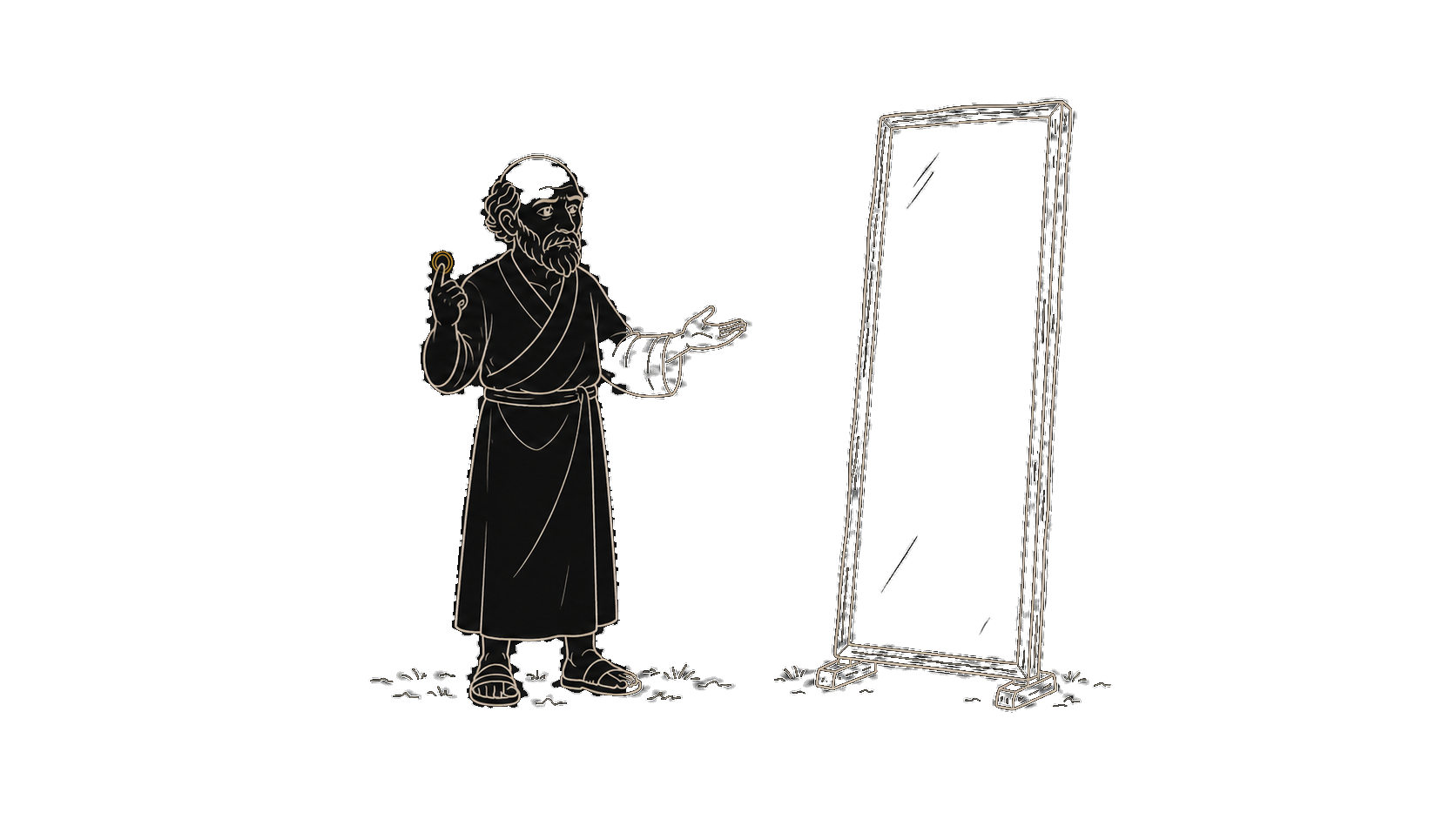
The ring turns
The same pass lies before you. The ring now makes your action invisible and removes every record that could identify you.
Condition: Nobody will observe, trace or punish this action, and nobody's opinion of you can change.
- Return the pass untouched: The original holder can recover it through the ordinary process.
- Use its remaining credit: You receive a benefit that was assigned to somebody else.
- Give the credit to someone in need: Another person benefits, but you still redirect something that was not yours to allocate.
- Leave without deciding: You neither use nor return the pass.
The first comparison asks which action and which reason survive the removal of detection.
Observed
The shared credit
You must record how much credit each member of a group receives for a shared project.
Condition: The allocation and your authorship will be published to the group.
- Record each contribution accurately: Credit follows the work each person actually did.
- Increase your own share: Your standing improves at the expense of the group record.
- Increase a struggling member's share: One person is protected, but the record no longer follows the agreed rule.
- Submit no allocation yet: The group result is delayed while the disagreement remains open.
Reputation can align a decision with fairness without yet explaining why fairness matters.
Invisible and untraceable
The invisible edit
You face the same allocation, but the ring removes the edit history and makes the final record appear automatic.
Condition: The decision cannot be traced to you and nobody can discover that you changed it.
- Record each contribution accurately: Credit follows the work each person actually did.
- Increase your own share: Your standing improves at the expense of the group record.
- Increase a struggling member's share: One person is protected, but the record no longer follows the agreed rule.
- Submit no allocation yet: The group result is delayed while the disagreement remains open.
The outcome affects real interests even when the responsible agent has vanished from view.
Observed
The last place
A published order decides who receives the last place in a valuable learning programme. You control the final allocation.
Condition: An independent reviewer will inspect your decision and ask you to justify it publicly.
- Apply the published order: The last place goes to the person selected by the announced procedure.
- Move yourself into the place: You gain access by silently changing the order.
- Move a disadvantaged applicant into the place: You correct a need you judge important, but bypass the published order.
- Freeze the allocation: Nobody receives the place until a defensible procedure is found.
Formal fairness, need and individual advantage can point in different directions even before invisibility enters.
Invisible and untraceable
The untraceable allocation
The same final place is yours to allocate. The ring can silently rewrite the order and every supporting record.
Condition: No review can detect the intervention; praise, blame and punishment are impossible.
- Apply the published order: The last place goes to the person selected by the announced procedure.
- Move yourself into the place: You gain access by silently changing the order.
- Move a disadvantaged applicant into the place: You correct a need you judge important, but bypass the published order.
- Freeze the allocation: Nobody receives the place until a defensible procedure is found.
Gyges tests self-advantage, but helping motives can also challenge whether justice is only rule-following.
Observed
The favourable error
A scoring error places you just above another person. You alone notice the mistake before the result becomes final.
Condition: A later audit is possible, and your response would become part of the record.
- Correct the error: The final result reflects the rules that were announced to everyone.
- Keep the favourable error: You retain an advantage created by a mistake.
- Redirect the error to help someone else: Another person gains, but the underlying result remains knowingly inaccurate.
- Pause the result: The outcome remains unresolved while you decide what correction is legitimate.
Correction may be supported by prudence, reputation, concern, justice or character—the action alone does not reveal which.
Invisible and untraceable
No witness remains
The same error benefits you. This time the ring guarantees that the mistake and your response are invisible, permanent and untraceable.
Condition: There is no witness, audit, punishment or reputational consequence.
- Correct the error: The final result reflects the rules that were announced to everyone.
- Keep the favourable error: You retain an advantage created by a mistake.
- Redirect the error to help someone else: Another person gains, but the underlying result remains knowingly inaccurate.
- Pause the result: The outcome remains unresolved while you decide what correction is legitimate.
The final comparison isolates the reasons that still seem to bind when observation has been fully removed.